
![[Wakayama Guide] When You Think of Wakayama, Think of Mandarin Oranges! The 2nd Installment of the Autumn Culinary Series!](https://resources.matcha-jp.com/resize/720x2000/2025/09/19-244733.webp)
This time's theme is everyone's favorite: the mandarin orange! Like persimmons, Wakayama is also famous as a leading production area of mandarins in Japan. In this article, we’ll dive into the charm that is Wakayama’s mandarins!
2025.11.06-
Table of Contents
- Wakayama, A major Mandarin Orange producing region
- Wakayama mandarins are extremely popular among Edoites (now Tokyo)!
- Various ingredients and effects contained in mandarins
- How to tell if a mandarin orange is delicious
- Processed products using mandarin oranges
Wakayama, A major Mandarin Orange producing region
When you ask Japanese people, "What is the best place to produce mandarin oranges?", many of them will first mention Wakayama. This is no surprise, as Wakayama consistently boasts the highest mandarin orange harvest in the country.
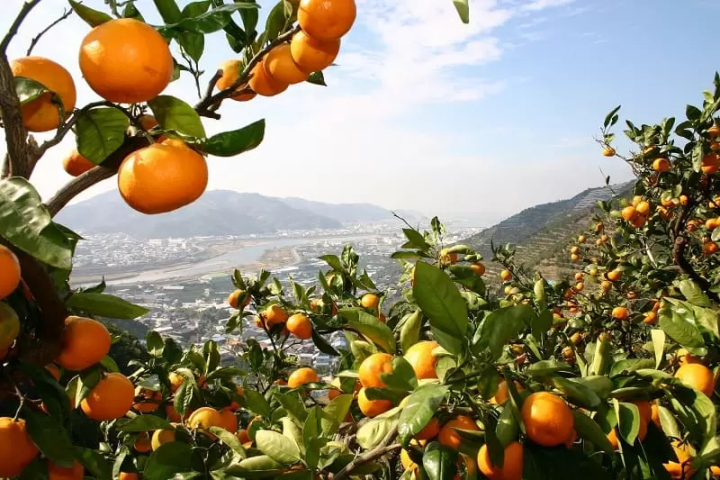
Located at the southernmost tip of Honshu, Wakayama is blessed with a mild climate even in winter , making it ideal for growing Wakayama oranges, which prefer sunny, warm climates. In the Arida region of Wakayama, where Aridagawa orange cultivation is particularly popular, mandarin orange orchards stretch out across the mountains on either side of the Arida River and along the coast.
Wakayama mandarins are extremely popular among Edoites (now Tokyo)!
In fact, Wakayama orange cultivation has been thriving in Arida, Wakayama for about 450 years. The trigger that led to Arida oranges becoming popular throughout Japan was the shipment of mandarins by ship to Edo (present-day Tokyo) in 1634 .
Records show that 400 baskets of mandarins were shipped from Arida to Edo in the same year. Arida mandarins were so sweet and sour , and so highly acclaimed for their outstanding color and shape, that 2,000 baskets were sent the following year, and as many as 500,000 baskets were sent to Edo between 1716 and 1736.
This popularity in Edo led to the spread of the name " Kishu mikan."
Various ingredients and effects contained in mandarins
Two medium-sized mandarins contain enough vitamin C to provide about half (100 mg) of the recommended daily intake for adults . In addition, beta-cryptoxanthin is expected to have a preventive effect against arteriosclerosis and osteoporosis .
Furthermore, dried mandarin peel, known as "chinpi," is also highly valued as an ingredient in traditional Chinese medicine .
How to tell if a mandarin orange is delicious
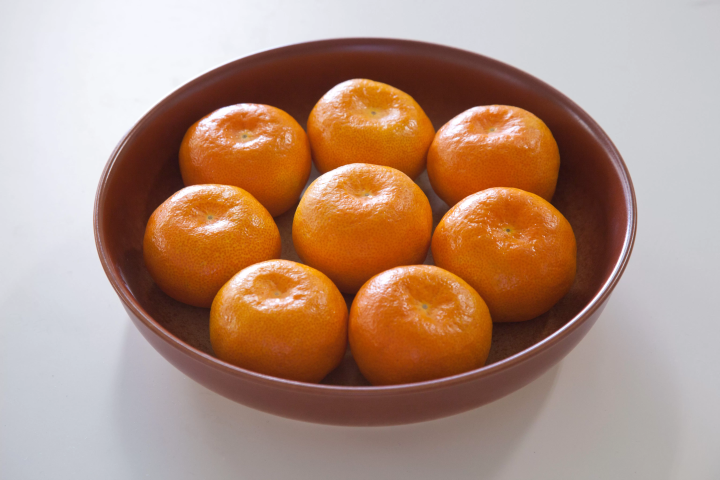
When identifying delicious mandarins, please refer to the following.
- Deep orange color
- The skin is thin and firm
- The oil sacs (containing aromatic and oily components) that can be seen on the surface of the skin are finely textured.
- The stem (cut end of the branch) is thin.
Take this opportunity to try it!
Photo courtesy of Wakayama Prefecture Tourism Federation
Processed products using mandarin oranges
Many different products using mandarin oranges have been developed recently. Here are some examples.
[Tangerine marmalade jam]
This jam is overflowing with the bounty of Wakayama. Made with Yura mikan oranges from Wakayama Prefecture, it has been transformed into a fresh, creamy marmalade jam that retains the fruity flavor. The color and aroma are locked in, as if the oranges were whole, and it goes well with yogurt or ice cream.
[Tangerine jelly in a cup] Bite-sized jelly made with sweet Arita mandarin juice.
[ Wakayama Mandarin Potato Chips]
These potato chips are made using Arita mandarin orange powder and are prepared using the traditional boiling method, giving them a subtle mandarin orange flavor.
*The above products can be purchased at roadside stations and drive-ins in the Kumano area (operated by Kumano Tourism Development Co., Ltd.). Detailed information on each facility is posted in the article below, so be sure to check it out!
[Trivia] Arida Mikan cultivation has been recognized as a Globally Important Agricultural Heritage System!
Arida's mandarin orange cultivation has been carried out by farmers for over 400 years, who have cultivated magnificent stone-staircase orchards, skillfully utilizing the natural conditions to introduce a variety of varieties, and making full use of storage techniques to enable long-term relay shipments.This system has been highly praised and has been designated a Globally Important Agricultural Heritage System!
The contents on this page may partially contain automatic translation.