
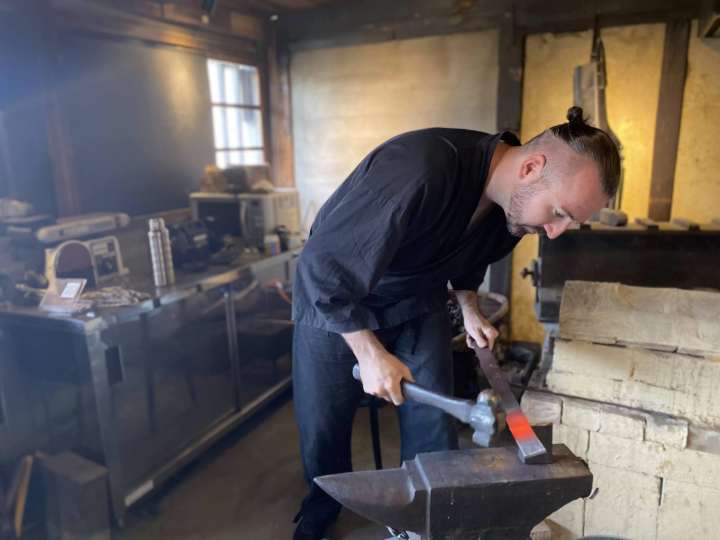
This article introduces a guided tour for those interested in Japanese traditional industries and craftsmanship, where you can learn about Sakai forged blades—highly regarded by chefs worldwide—directly from Eric Chevalier, a French blacksmith based in Sakai. Through an authentic blacksmithing experience and live knife-making demonstrations, visitors can feel the power of hands-on work and the depth of Japan’s time-honored forging techniques.
2026.07.10-
Table of Contents
- What Are Sakai Forged Blades? 600 Years of Traditional Blacksmithing Craft
- Who Is Eric Chevalier? A French Blacksmith Bridging Japan and Europe
- Let’s Explore the Tour: From Fire Making to Blacksmithing Experience
- Facility Tour: Experience the History of Sakai Blades Through Architecture and Garden Design
- Here are some comments from participants
- Tour Details
- How to Make an Inquiry
What Are Sakai Forged Blades? 600 Years of Traditional Blacksmithing Craft
Traditional Sakai forged blades, crafted in Osaka’s historic city of Sakai, are made using a blacksmithing technique that forges together soft iron and hard steel. This unique method creates knives that are both highly durable and exceptionally sharp. Passed down through generations of skilled craftsmen, Sakai blades have earned high acclaim from professional chefs around the world. Today, they are officially recognized as a Traditional Craft of Japan.
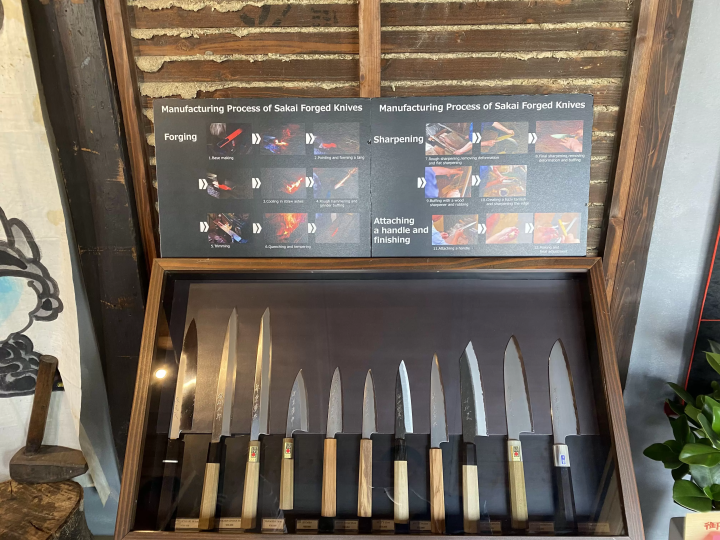
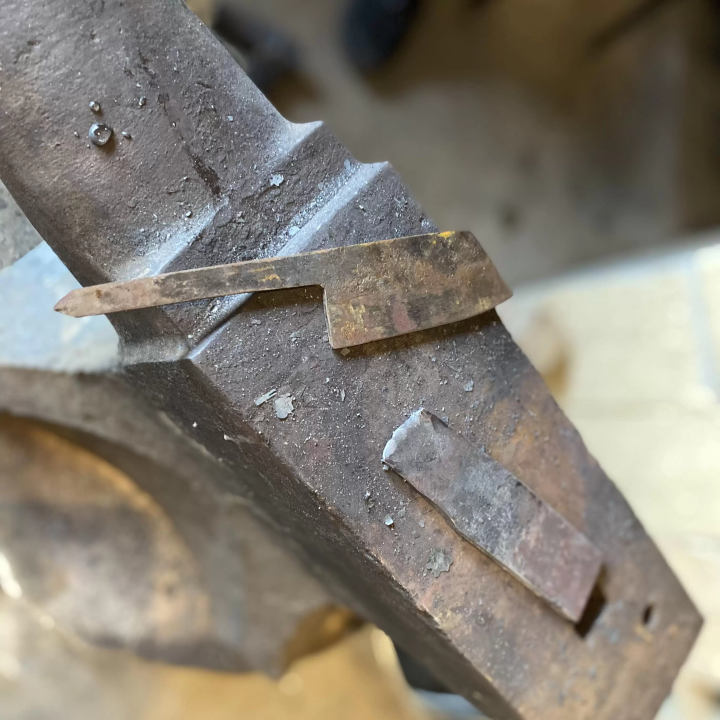
In Sakai's blacksmith shops, the "forging" process takes place, where iron heated in a furnace is repeatedly hammered and stretched to shape the blade. Watching the craftsmen concentrate on each strike, carefully adjusting the temperature and force to forge the metal, you can witness firsthand their experience, intuition, and high level of skill.
This tour not only allows you to visit the manufacturing sites and blacksmith shops of Sakai cutlery, but also offers the opportunity to actually swing a hammer and try your hand at blacksmithing. It is a valuable opportunity to experience with all your senses the power of the work and the profoundness of the traditional techniques that have been honed over a long history.
Who Is Eric Chevalier? A French Blacksmith Bridging Japan and Europe
Eric Chevalier, originally from France, trained in Sakai and was captivated by the Japanese language and culture, leading him to come to Japan in 2012. He honed his skills at Sasuke, a long-established ironworks in Sakai, learning traditional Japanese blacksmithing techniques and the methods of making Sakai cutlery. His skills and dedication were highly praised, and in 2015 he received the "Rising Star" award from the French government.
After approximately five years of training, he worked as an overseas market development coordinator at the Sakai City Industrial Promotion Center. Currently, he is involved in guiding tourists, giving lectures, and conducting overseas PR projects, acting as a bridge to spread the appeal of Sakai cutlery both domestically and internationally, and conveying Japan's manufacturing culture to the world.
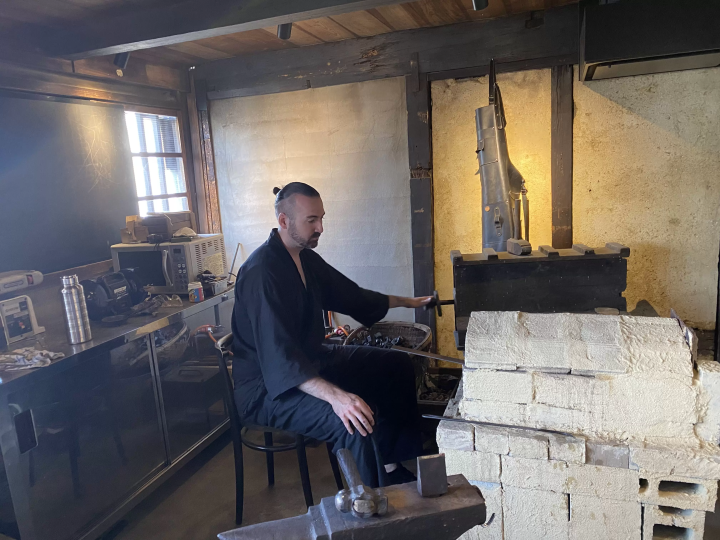
Let’s Explore the Tour: From Fire Making to Blacksmithing Experience
Here's a look at the guided tour. The tour followed this schedule:
From fire-making to a series of preparations ⇒ Blacksmithing experience + knife making tour
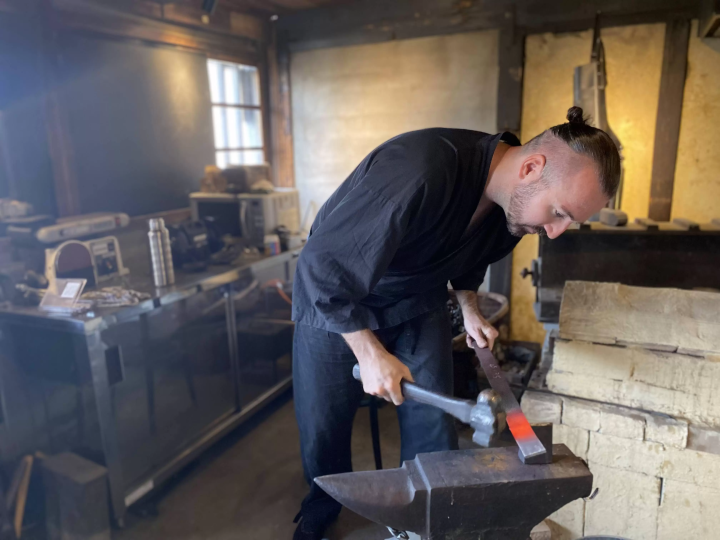
Now, let's take a look at the blacksmithing experience tour. The first step in blacksmithing is "fire-starting," which is essential to all processes. In the blacksmith's workshop, a fire is started using Binchotan charcoal, which produces less smoke and odor, and a well-ventilated furnace. A unique feature is that the charcoal used is hollow inside, allowing for precise control of the fire's intensity.
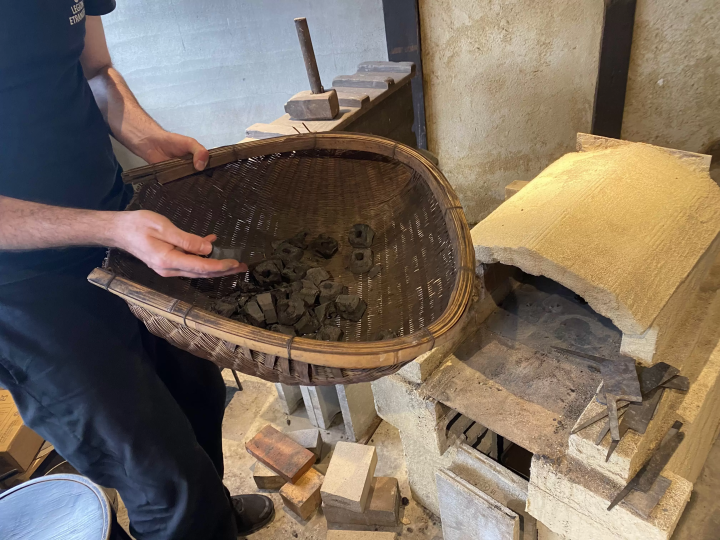
Once the fire is lit, the charcoal gradually catches, crackling with a gentle “pop‑pop” sound as it glows red. In that moment, visitors can truly feel the opening act of the blacksmithing world.
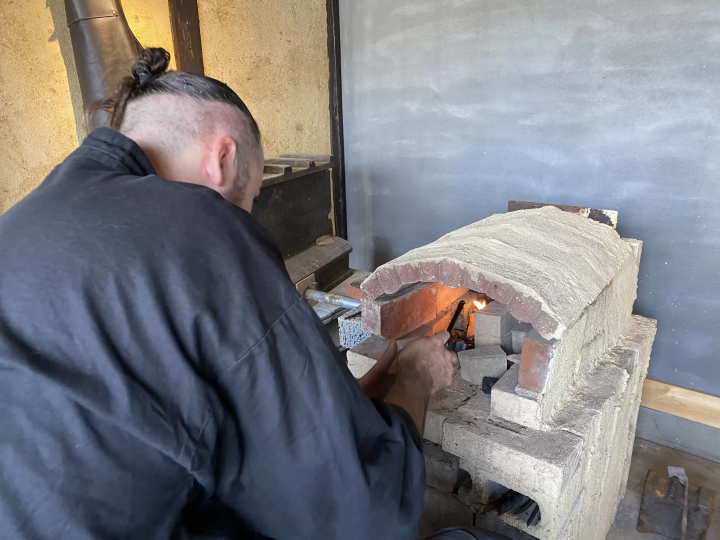
While modern forges often rely on gas heating, this workshop uses traditional, manually operated bellows crafted by Eric himself. By pumping air into the furnace through a hand‑powered system, the fire is slowly nurtured, raising the temperature little by little—just as it was done centuries ago.
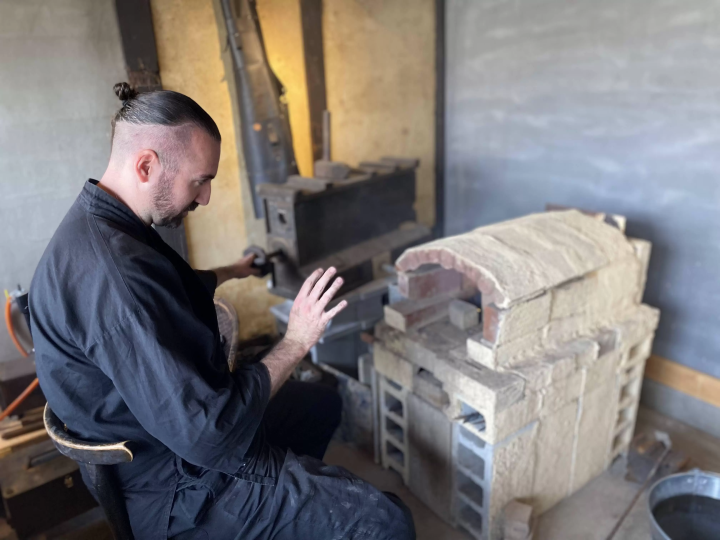
The charcoal gradually changes color, eventually beginning to glow red. Watching this transformation up close, you are naturally drawn in by the ingenuity and experience of the craftsman who judges how the temperature rises and the state of the charcoal.
Once the furnace reaches a sufficient temperature, the iron is finally placed inside. The temperature inside the furnace is much higher than it appears, sometimes exceeding 800 degrees Celsius. This is how the real process of making blades begins.
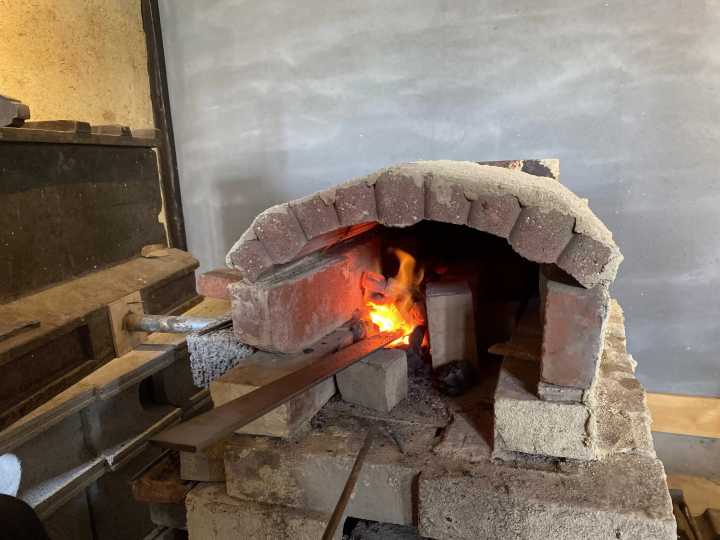
Next comes the most exciting part: picking up a hammer and forging the iron yourself. When the hammer strikes the glowing metal with a powerful “clang,” you can see the iron gradually extending and taking shape. Feeling the weight of the hammer, the resistance of the metal, and the rising heat all at once, participants gain a deeper understanding of the blacksmith’s craft. Standing in the workshop, this immersive experience allows visitors to truly grasp the depth of Japanese forging traditions.
Facility Tour: Experience the History of Sakai Blades Through Architecture and Garden Design
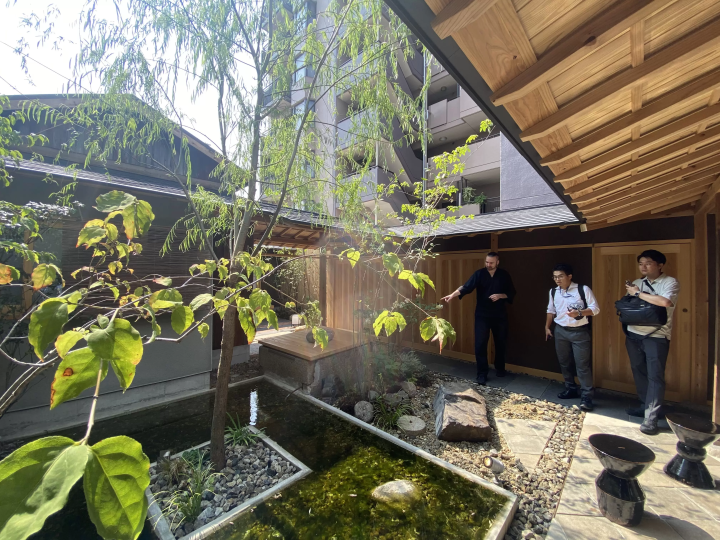
Behind the renovated building of a former Sakai blade merchant, originally constructed in the late Edo period, lies a special private accommodation reserved exclusively for guests. While preserving the charm of historical architecture, the space has been carefully modernized, allowing visitors to experience the unique atmosphere of Sakai as a town shaped by craftsmanship and blade-making traditions.
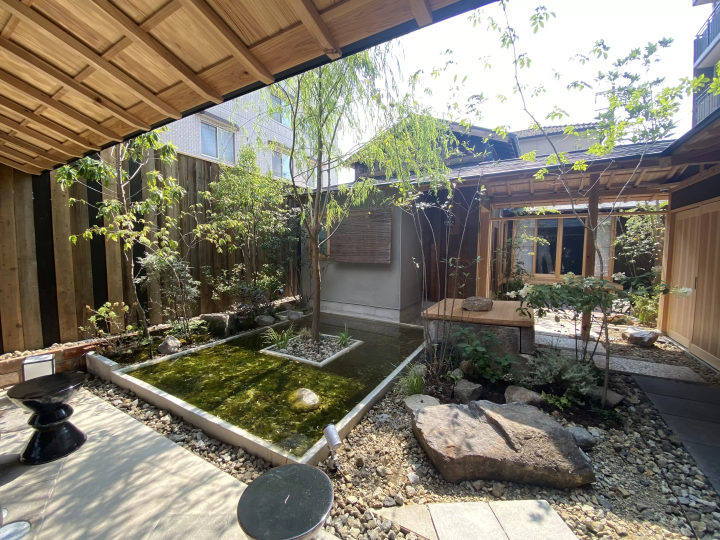
Eric also offers a guided introduction to the thoughtfully designed garden and the plants that thrive there, explaining the ideas and techniques behind the landscape. Providing a different perspective from the blacksmithing experience, this calm and reflective tour offers insight into Japanese aesthetics and spatial design, creating a peaceful moment to appreciate the cultural depth of Japan.
Here are some comments from participants
A Family Traveler from Hawaii , Ms. A (30s)
I’ve always been interested in Japanese blade-making culture, and this experience exceeded my expectations. Eric’s English explanations made it easy to understand the traditions and craftsmanship behind it all. My child especially loved helping start a fire with charcoal—it felt like a real adventure. It was a fun and memorable experience for our whole family.
Tour Details
In this tour, Eric will share his own experiences and provide an easy-to-understand introduction to the history and appeal of blacksmithing in Sakai. In addition to expert discussions on topics such as charcoal selection and determining the correct iron temperature, participants can also experience blacksmithing by actually using a hammer to strike iron and observe the knife-making process. Furthermore, there will be detailed explanations on how to choose and maintain kitchen knives, allowing participants to learn knowledge that can be useful in everyday life. This tour combines experience and learning, making it enjoyable for both adults and children.
• Price: From 58,500 yen (tax included) per hour / Group rate
*Prices vary depending on the language supported.
• Number of participants: 1 to 20 people (Maximum of 20 people for tours only)
• Duration: Approximately 60 to 90 minutes
• Contents: Blacksmithing experience, knife making demonstration
• Application deadline: 1 week in advance
• Supported languages: English, French, Japanese.
*If you require a language other than those listed above, separate arrangements for an interpreter will be necessary.
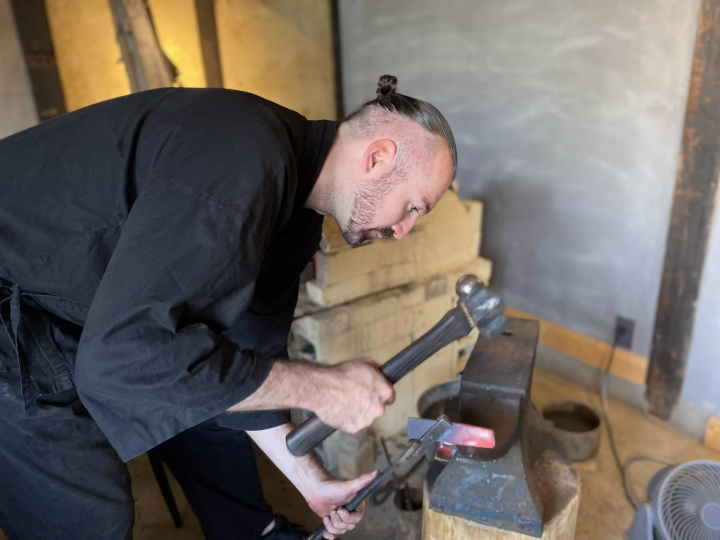
Beyond the authentic blacksmithing experience, this tour also offers opportunities to explore the history of Sakai and take a relaxed walk through the entire facility. Popular among international visitors, the experience is designed to be approachable and enjoyable for guests from abroad.The tour is guided by Eric, who fluently speaks Japanese, English, and French, allowing participants to join without any language concerns. Visitors from overseas are warmly welcomed, including those who wish to take part in observation-only tours.
How to Make an Inquiry
1. Please fill out the required information in the form below and submit your inquiry.
2. We will contact you within 3 business days from "industrial.tourism@nankai.co.jp".
Feel free to contact us for availability, scheduling consultations, or detailed tour information. We look forward to hearing from you!
The contents on this page may partially contain automatic translation.