
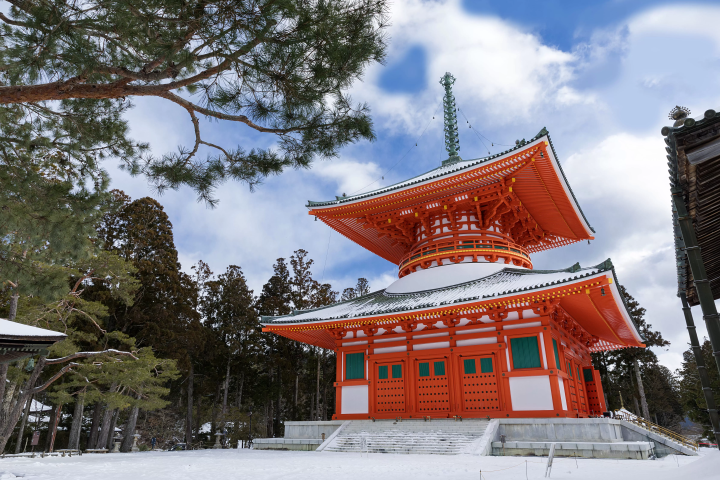
Koyasan is the sacred site of Shingon Esoteric Buddhism, founded by Kobo Daishi (Kukai). While the cherry blossoms and autumn foliage are breathtaking, the snow-covered scenery in winter is truly exceptional. This time, we’ll introduce the charms of Koyasan in winter.
2025.12.23-
Table of Contents
- Can you Visit Koyasan During Winter?
- Highlights of Koyasan in Winter
- What to Wear in Winter at Koyasan
- How to get to Koyasan in Winter?
Can you Visit Koyasan During Winter?
Yes! You can still visit places like Kongobu-ji Temple, Danjo Garan, and Okunoin during the winter season.
After the autumn, leaves fall in November, temperatures drop even further from December onward, and snow often accumulates on Koyasan. The sight of trees and temples blanketed in snow creates a magical atmosphere that you can't experience in any other season.
*Please note: Viewing hours for these spots may vary depending on the season, so check with each facility in advance.
*Also, the winter operating status of temple lodgings and restaurants differs by location. We recommend contacting each facility before your visit.
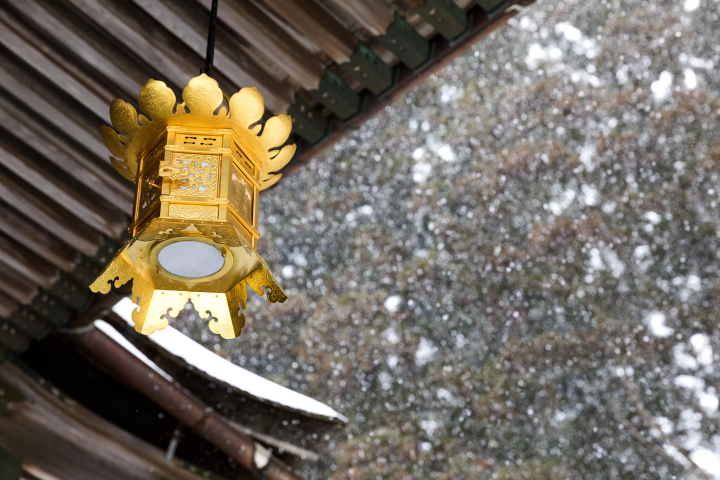
Danjo Garan (Mieido Hall)
Highlights of Koyasan in Winter
Here are three spots where the snowy scenery is especially stunning!
Kongobu-ji Temple
The head temple of Koyasan's Shingon Buddhism. When you enter the grounds from the parking lot in front of Kongobu-ji, the first gate you pass through is called the Seimon (Main Gate). In the past, only the Emperor, members of the Imperial Family, and high-ranking officials of Koyasan could enter through this gate. Designated as an Important Cultural Property of Japan, the sight of snow on the Seimon transforms the vibrant image of spring cherry blossoms into a solemn winter solace.
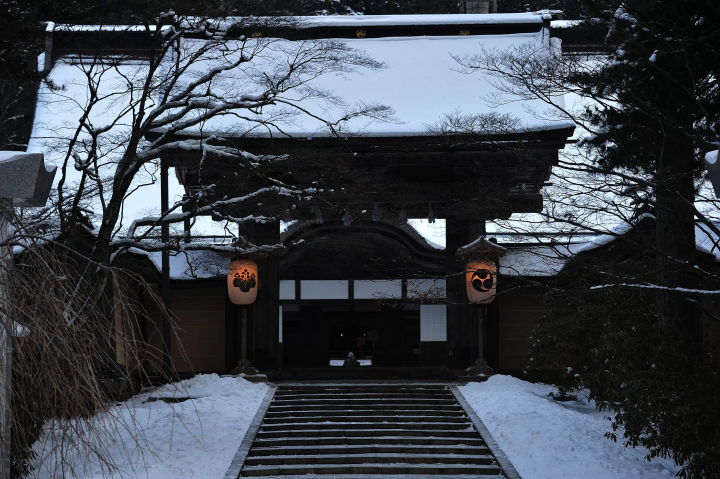
Kongobu-ji Temple Main Gate
Danjo Garan
When Kobo Daishi (Kukai) founded Koyasan, this was the first area he began to develop. Alongside Okunoin, it has long been a central place of worship. Among its structure, the Konpon Daito (Great Pagoda) continues to captivate, creating a striking contrast of white and red.
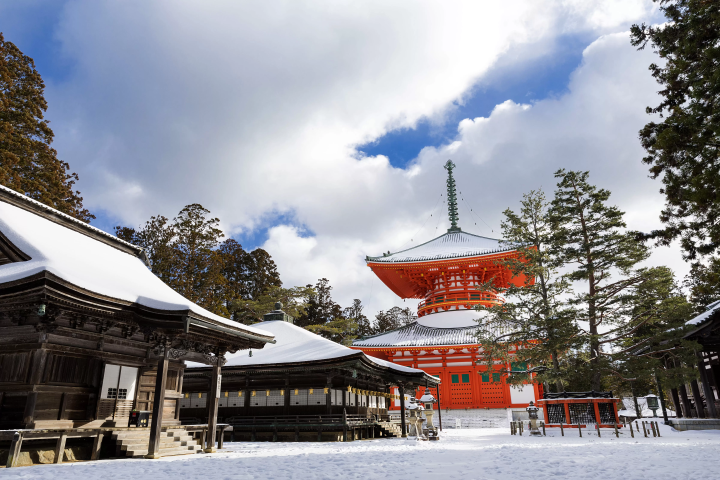
Danjo Garan (Main Pagoda)
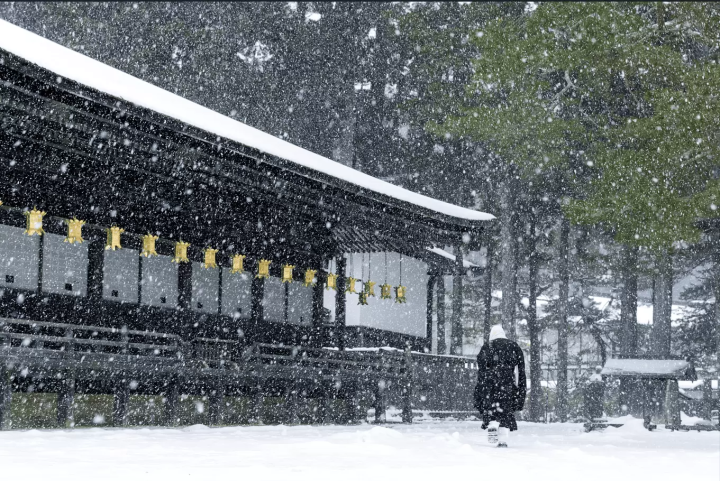
Danjo Garan (Mieido Hall)
Okunoin
The spiritual heart of Koyasan, where Kobo Daishi has been meditating for world peace and the happiness of all people since 835. This sacred site houses his mausoleum (Gobyo). The formal approach begins at Ichinohashi, and from there, the roughly 2-kilometer path to the mausoleum is lined with 200,000 gravestones, monuments, and memorials among the thousand-year-old cedar trees.
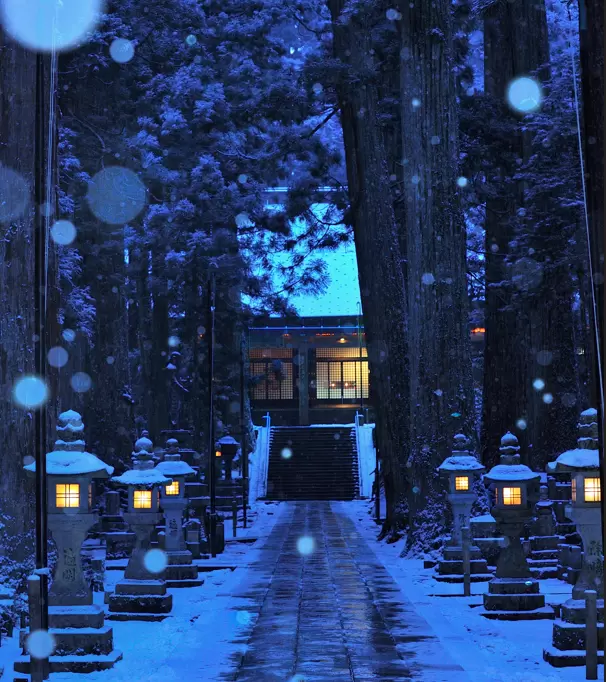
Okunoin (Gobyo)
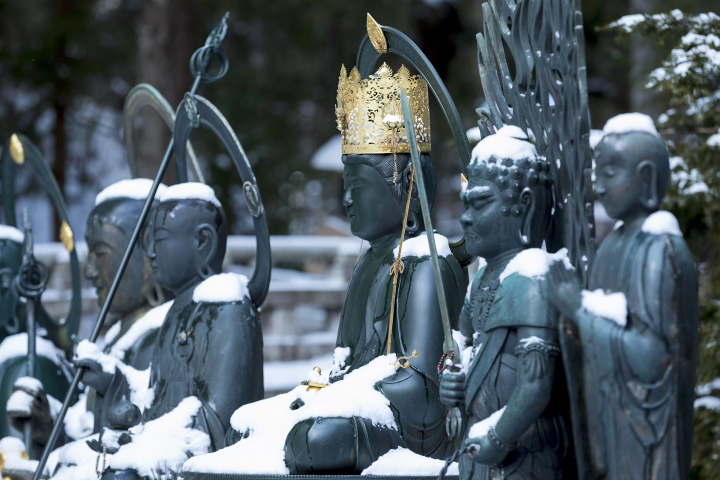
Okunoin
What to Wear in Winter at Koyasan
Mount Koya, which is about 800 meters above sea level, typically experiences snowfall from the end of December through February.
In January and February in particular, the highest temperature is around 4°C, and there are many days when the minimum temperature drops below freezing.
Therefore, when visiting the shrine, be sure to dress warmly, including a down jacket, sweater, gloves, scarf, earmuffs, and a hat. We also recommend wearing non-slip shoes in case it snows.
How to get to Koyasan in Winter?
During snowy periods, taking the train is recommended. From Nankai Namba Station, take the train to Gokurakubashi Station, then transfer to the cable car to reach Koyasan Station.
When you go to Koyasan, it's convenient to use this great value digital ticket that includes a round-trip train ticket (available only at certain stations), a two-day free bus pass within Koyasan, and coupons that can be used at nine facilities!
Please make use of this service when you visit Koyasan!
The contents on this page may partially contain automatic translation.